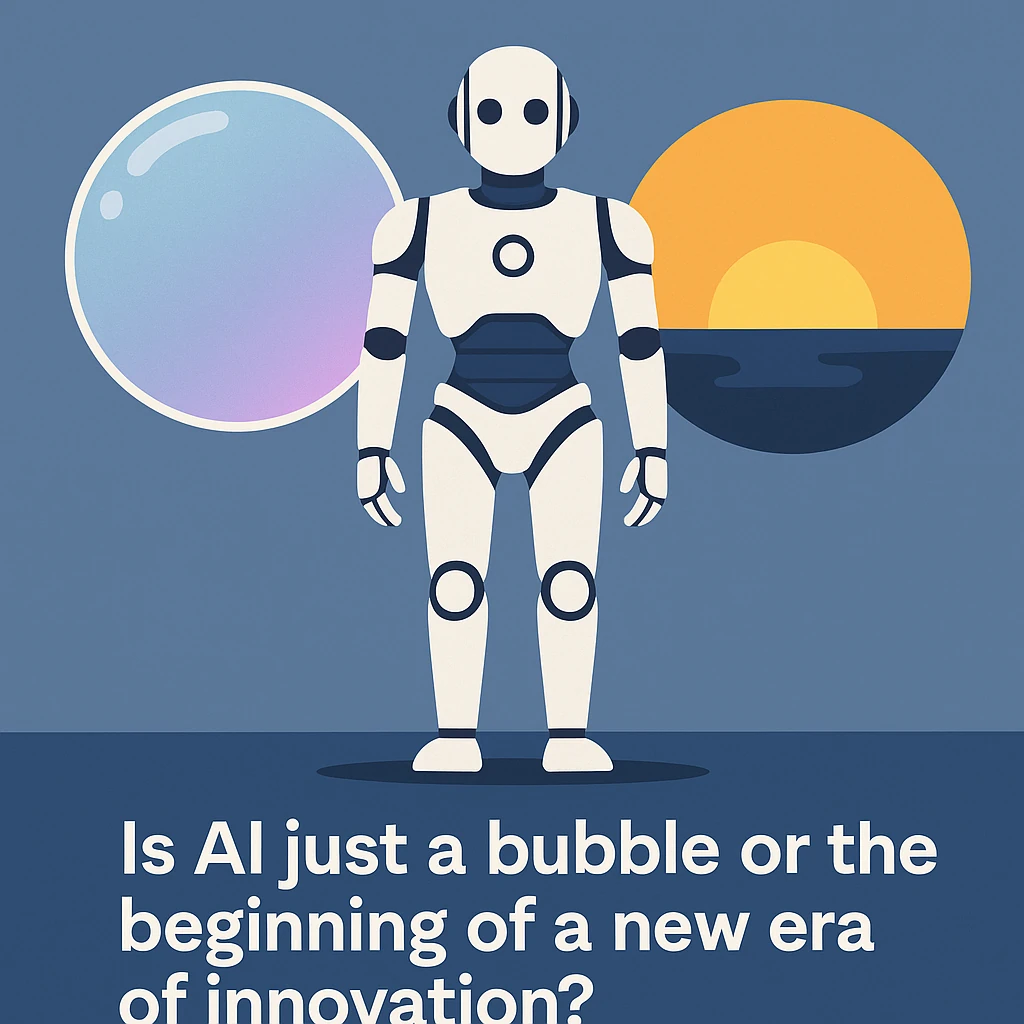
Artificial Intelligence (AI) is everywhere—from chatbots and recommendation systems to self-driving cars and medical diagnostics. With such rapid adoption, a pressing question arises: is this momentum a temporary bubble destined to burst, or is it the beginning of a revolutionary new era?
Why Some Believe AI Is a Bubble
Overhype and Unrealistic Promises
Just like the dot-com boom, AI is surrounded by lofty promises. Startups brand themselves as “AI-driven” to attract investment, even when their technology is minimal. This hype risks creating inflated valuations that may not match reality.
Market Saturation
Hundreds of AI tools are being launched weekly, many of which duplicate each other’s functions. As the market becomes saturated, weaker players may collapse, leading to skepticism about AI’s sustainability.
Ethical and Regulatory Challenges
Governments worldwide are struggling to regulate AI. Concerns about privacy, bias, and misuse could slow adoption or create barriers that expose AI’s limitations, fueling the idea of a bubble.
Why AI Could Be the Start of a New Era
Transformative Applications
Unlike previous tech bubbles, AI is already proving useful in real-world scenarios—improving healthcare diagnostics, optimizing supply chains, and enabling personalized education. These practical benefits make AI more than just hype.
Infrastructure and Ecosystem Growth
Big tech companies and governments are heavily investing in AI infrastructure, from advanced chips to large-scale models. This long-term investment indicates confidence in AI’s transformative potential rather than a short-lived trend.
Integration Into Daily Life
AI isn’t confined to research labs—it’s embedded in smartphones, workplaces, and consumer services. This integration suggests AI will continue evolving as a foundational technology, much like electricity or the internet.
Lessons From Past Bubbles
The dot-com crash of the early 2000s wiped out many internet companies, but it didn’t kill the internet. Instead, it paved the way for sustainable giants like Google, Amazon, and Facebook. Similarly, even if parts of the AI sector collapse, the underlying technology is likely to endure and reshape industries.
Balancing Skepticism and Optimism
Rather than asking whether AI is a bubble or a new era, a better question may be: Which parts of AI are overhyped, and which represent lasting change?
- Hype may fade around gimmicky apps or exaggerated promises.
- Enduring impact will likely come from sectors like healthcare, climate solutions, and education.
How Individuals and Businesses Can Respond
- Stay Critical: Not every AI startup will succeed; evaluate technology beyond buzzwords.
- Invest in Skills: Learning how to use AI responsibly is more valuable than chasing trends.
- Adopt Gradually: Experiment with AI tools but integrate them sustainably into workflows.
Conclusion
AI may have its bubbles, but that doesn’t mean it’s not the start of a profound transformation. Just like electricity, the internet, and smartphones, AI is shaping up to be a defining force of the 21st century. The real challenge lies in distinguishing short-term hype from long-term impact. Whether bubble or new era, one thing is certain: AI is here to stay.


