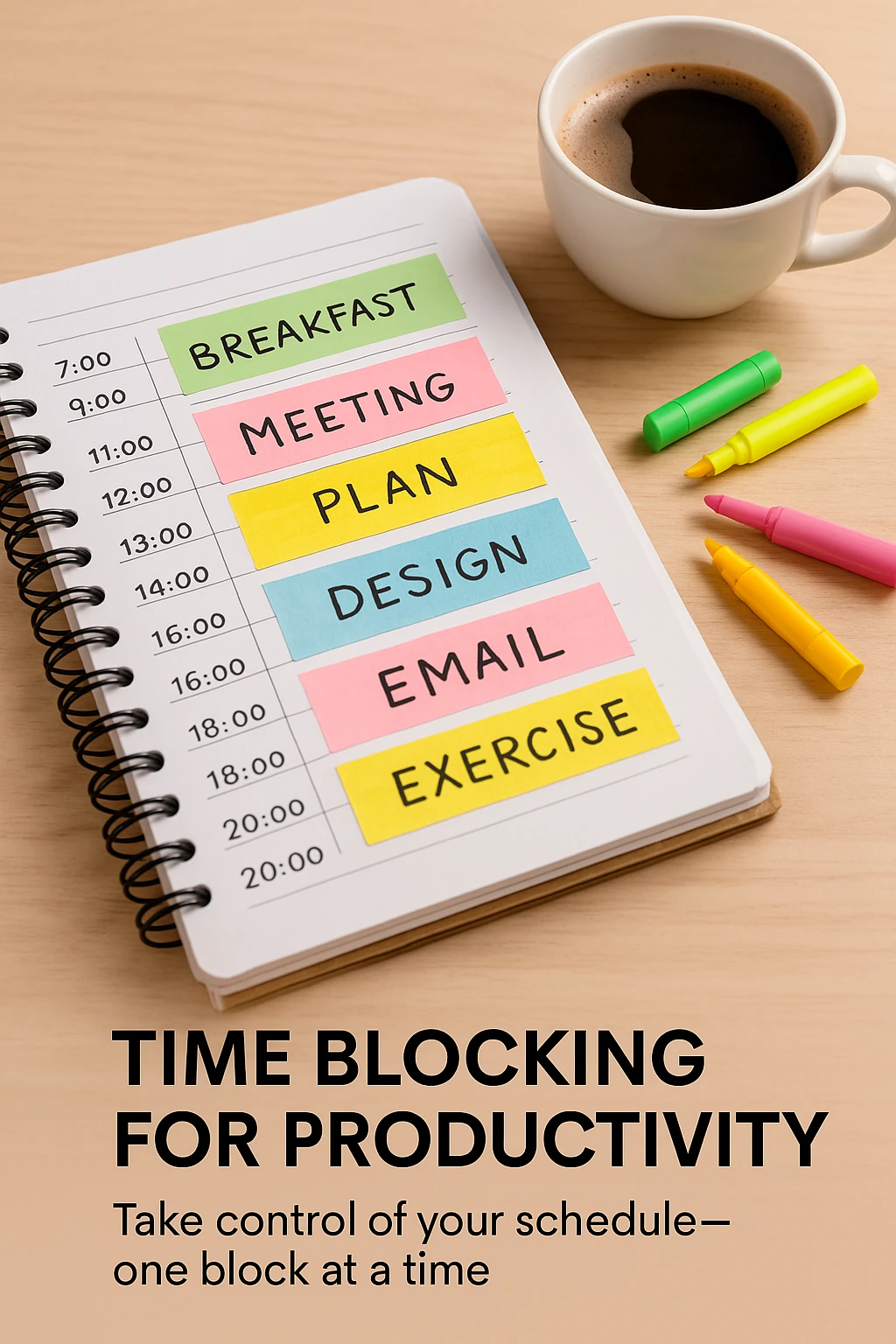
In a world full of distractions, staying focused can feel impossible. That’s where time blocking for productivity comes in. This simple yet powerful method helps you manage your time intentionally so that you can do more without burning out.
What Is Time Blocking?
Time blocking is a scheduling technique where you divide your day into blocks of time. Each block is dedicated to a specific task, project, or type of work. Instead of working off a to-do list, you assign each task a time on your calendar. This brings structure, clarity, and flow to your day.
Why Time Blocking Works
Unlike multitasking, time blocking helps your brain stay in a focused state. It reduces context switching and decision fatigue. Moreover, by seeing your time visually, you become more aware of where it’s going—and how to reclaim it.
How to Start Time Blocking
- Step 1: Identify your top priorities for the day or week
- Step 2: Break them into smaller, manageable tasks
- Step 3: Assign a time block for each task on your calendar
- Step 4: Include breaks and buffer time for flexibility
- Step 5: Review and adjust your blocks as needed
Tips for Making It Work
Start small—try blocking just 1–2 hours a day to begin. Use digital calendars like Google Calendar or Notion for easy editing. Importantly, treat your time blocks as appointments with yourself. The more you respect them, the more productive you become.
Final Thoughts
Using time blocking for productivity can transform how you work. It doesn’t just help you get more done—it empowers you to focus, prioritize, and regain control of your time. Once you get into the habit, you’ll wonder how you ever worked without it.
Related posts:
Growth Mindset vs Fixed Mindset: What It Really Means
10 Daily Habits for Better Health


