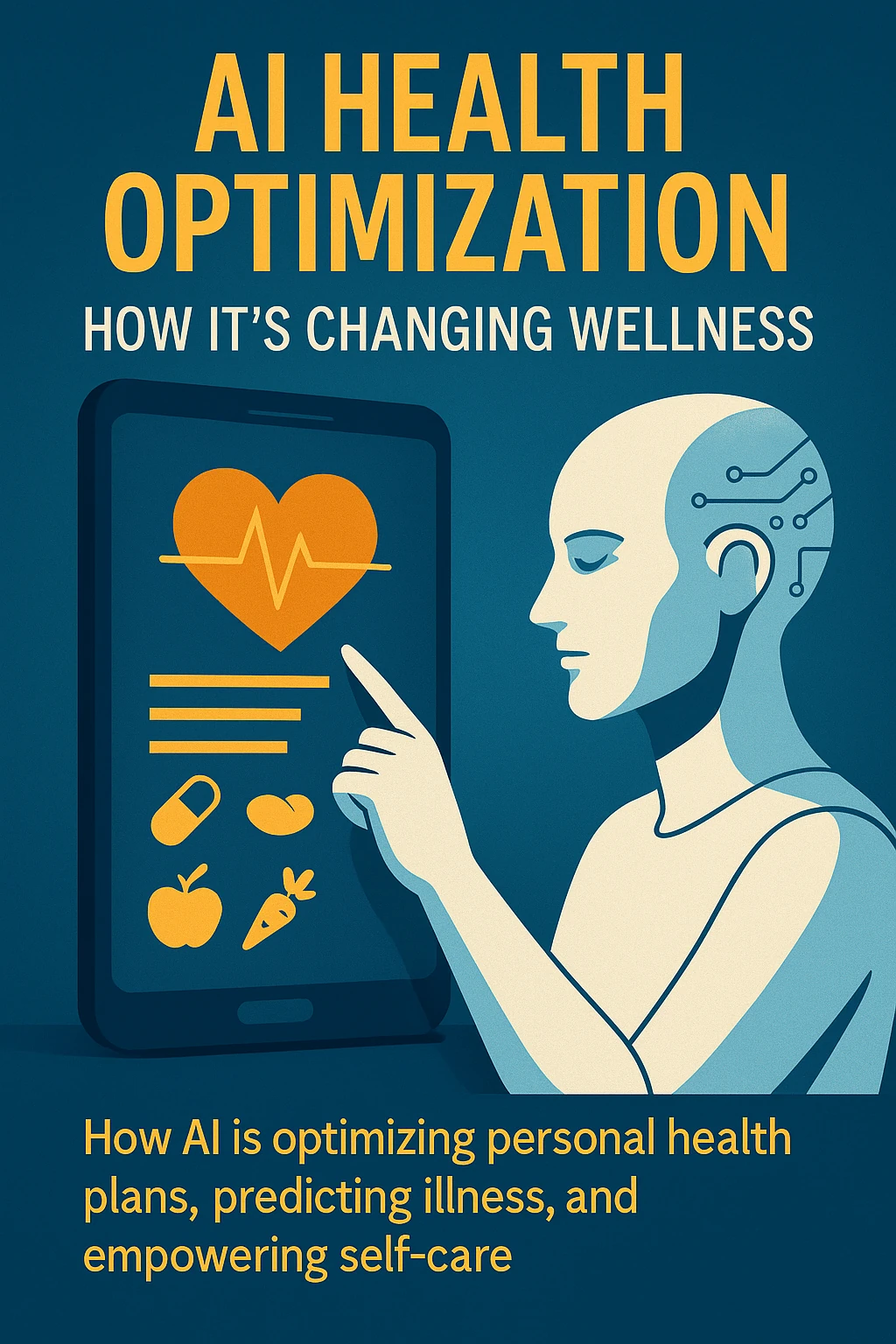
What if your next health breakthrough didn’t come from a doctor’s office — but from your phone? The rise of AI health optimization is reshaping how we approach wellness, from personalized fitness routines to predictive healthcare alerts. Whether you realize it or not, artificial intelligence is quietly becoming your new health advisor.
From General Advice to Personalized Wellness
Traditional health advice has always followed the “one-size-fits-all” model. But AI changes that. With access to data from smartwatches, health apps, sleep trackers, and more, AI can analyze your body’s rhythms and create wellness plans tailored just for you.
Think about it: no more guessing if a keto diet will work for you. No more blindly following influencer workouts. AI tracks your biometrics, sleep quality, food intake, and movement patterns — and then recommends what your body actually needs.
Fitness, Sleep, and Diet: Real-Time Optimization
AI-powered apps like WHOOP, Fitbit, and Apple Health are already adjusting training intensity based on recovery data. Others recommend meals based on blood sugar response or microbiome analysis. Sleep optimization tools now tell you not just how long you slept, but how restorative it was — and how to improve it tonight.
AI health optimization isn’t about doing more. It’s about doing what matters, at the right time, for your unique system.
The Rise of Predictive Health
Beyond daily routines, AI is moving into preventive care. Machine learning models are being trained to detect early signs of heart disease, diabetes, and even certain cancers — all based on your wearable data and digital health history.
This means your body could soon be monitored not reactively, but proactively. Early warning signals could be flagged days, weeks, or even months before symptoms occur.
Empowerment Through Data
Some people fear AI in healthcare will depersonalize care. But when used correctly, it can do the opposite: make care more personal, more predictive, and more empowering. You become the center of your own health system — guided by data, not drowned in it.
As we move into this new frontier of wellness, one thing is clear: AI health optimization is not a trend. It’s the foundation of a smarter, more responsive way to care for ourselves.
To see how AI already touches your daily life, check out our post on AI Lifestyle Trends.


