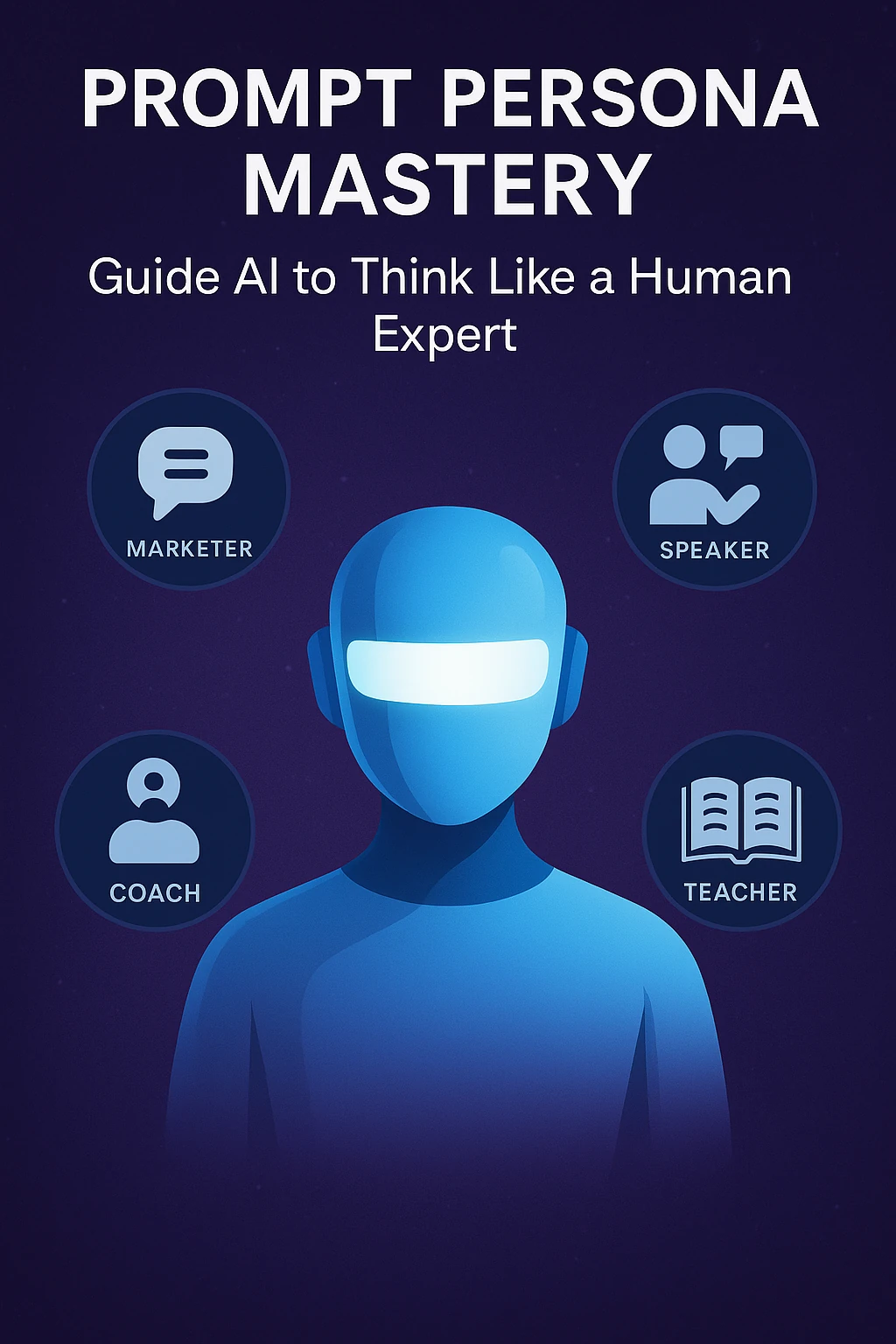
Prompt persona techniques are revolutionizing how we interact with AI. Instead of issuing basic commands, advanced users now shape responses by assigning roles, perspectives, or emotional tones. This subtle but powerful shift allows you to guide AI into thinking like a copywriter, strategist, therapist—or any expert persona you define.
What Is a Prompt Persona?
A prompt persona is a role or identity assigned to an AI in a prompt. For example, saying “Act as a social media expert…” primes the AI to generate responses consistent with that mindset. This doesn’t just change tone—it recalibrates how the AI weighs relevance, style, and depth. It’s like switching gears in a high-performance engine.
Why It Matters for Content Creation
When you apply a prompt persona, AI can produce more tailored and goal-driven content. Instead of sounding robotic or generic, the responses reflect domain expertise. Marketers use this to generate targeted copy, while coaches apply it to simulate emotional intelligence. You’re no longer just asking for help—you’re hiring a virtual assistant with a personality.
Examples That Work
- “You are a persuasive email marketer. Write a subject line with high CTR.”
- “Act as a TED speaker explaining this topic to a curious audience.”
- “Assume the role of a mindset coach. Rewrite this message to motivate.”
Each example triggers a different cognitive lens in the AI. As a result, you get content that aligns with intent, tone, and audience expectations. These tweaks are often the difference between a good output—and a great one.
Building Your Own Prompt Persona Library
Smart users develop prompt libraries filled with persona templates. These might include tone (e.g., empathetic vs. assertive), domain knowledge (e.g., legal, fitness, SaaS), or format preferences (bulleted lists vs. storytelling). This systematizes creativity—ensuring consistency across tasks.
Limitations to Watch For
While prompt personas are powerful, they require context. If a persona is too vague, AI might revert to generic output. It’s also possible to confuse the model by layering conflicting instructions. Clarity wins: the more vivid your persona, the sharper the results.
Conclusion: Shape AI’s Mind
Prompt persona frameworks aren’t gimmicks—they’re control levers. By guiding AI to “think like” a marketer, a coach, or an educator, you’re shaping the very lens it uses to interpret your request. The future of prompting isn’t about commands—it’s about identity and intention.


